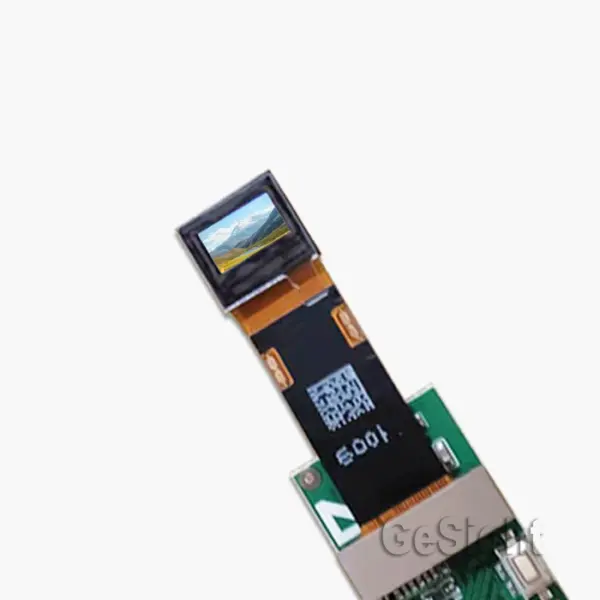
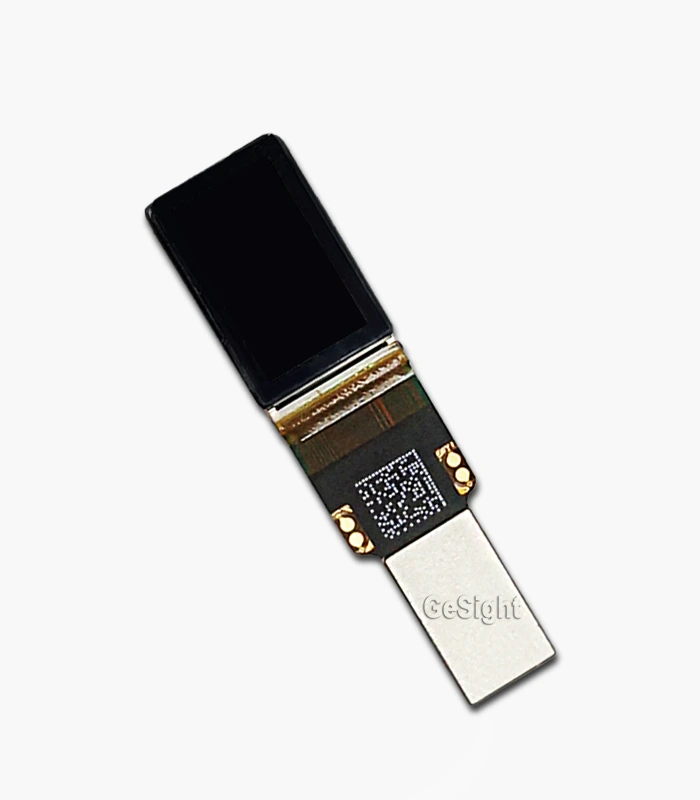
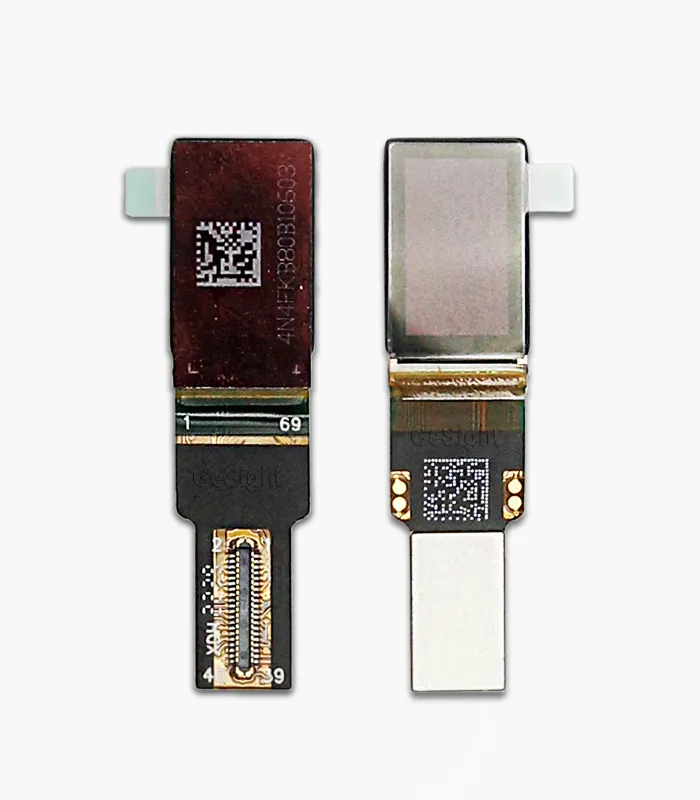
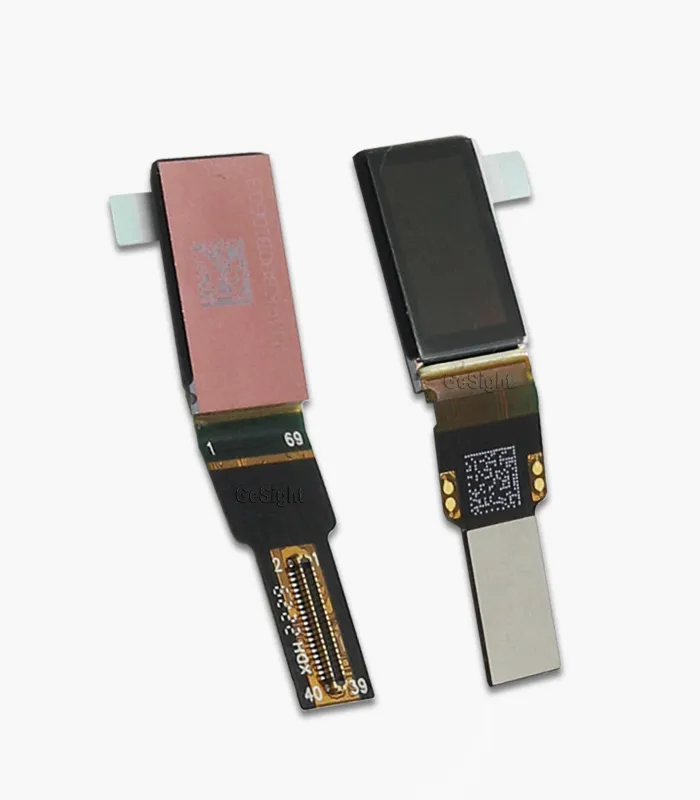
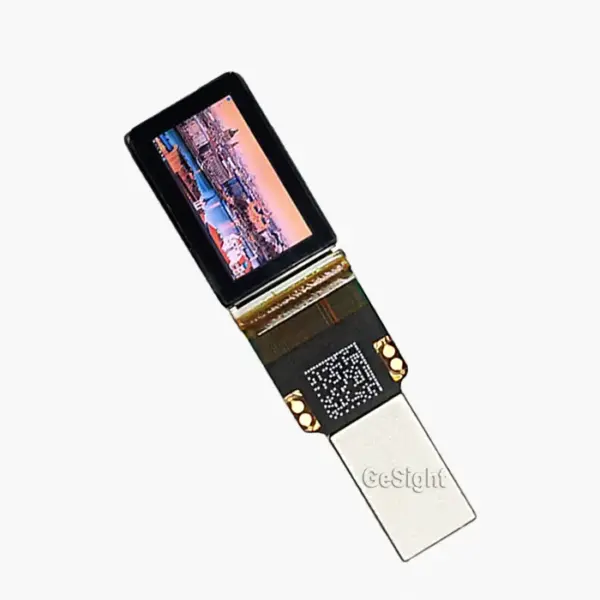
0.49-inch 1920×1080 Micro OLED Display

$182.25piece

20 People watching this product now!

Quick Shipping

1-2 days after payment

Sturdy packaging

Never Damage in Ship

24/7 Support

Unlimited help desk

5-7 days Delivery

DHL/Fedex/UPS

Get Your Exclusive Quotation

 Website prices are retail (incl. shipping & PayPal fees). Company clients enjoy up to 70% off on bulk orders — submit your requirements now.

Description

Model: BO049FHPMO

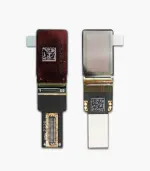
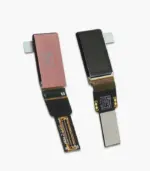
The 0.49-inch FHD Micro OLED Microdisplay is designed for ultra-compact near-eye optical engines where maximum sharpness and clean contrast are essential. With a 1920 × 1080 (FHD) resolution on a tiny microdisplay and an ultra-high 4496 PPI, it renders crisp text edges, fine UI elements, and detailed imagery for space-constrained AR/VR designs.

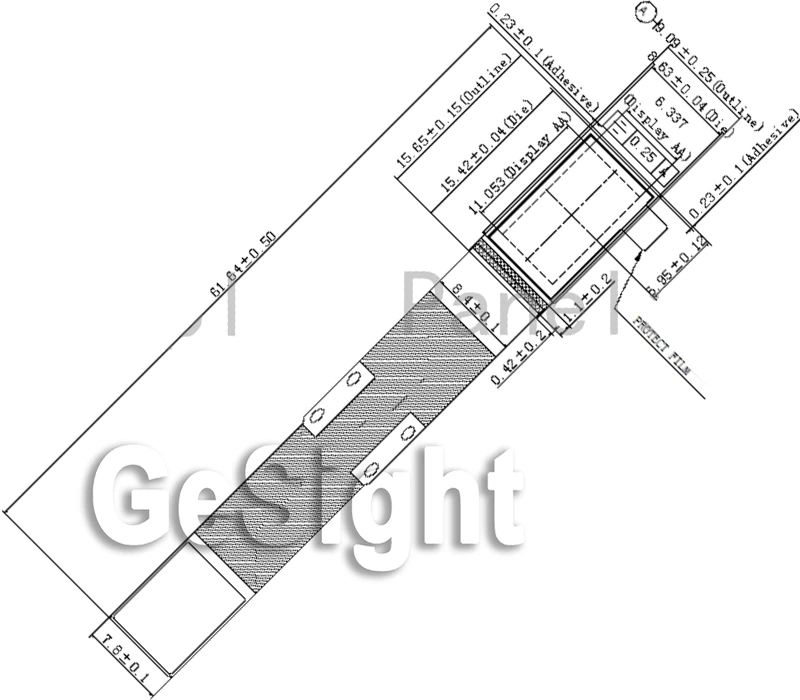
Built for stable system integration, this module supports a MIPI DSI (Video Mode) interface with 2/3/4 data lanes selectable, and operates across a 50–100 Hz refresh range for smooth motion performance. It provides a typical white brightness of 700 cd/m² (±20%), and features a compact 11.053 × 6.337 mm active area within an ultra-slim 15.65 × 9.09 × 1.50 mm outline, making it an ideal fit for miniature headset architectures and prototype rigs.

Application

AR/VR Near-Eye Displays | Optical Engines | Viewfinders | Head-Mounted Displays

Customized Options

FPC  | Touch Panel | Cover Glass | Controller Board | Brightness

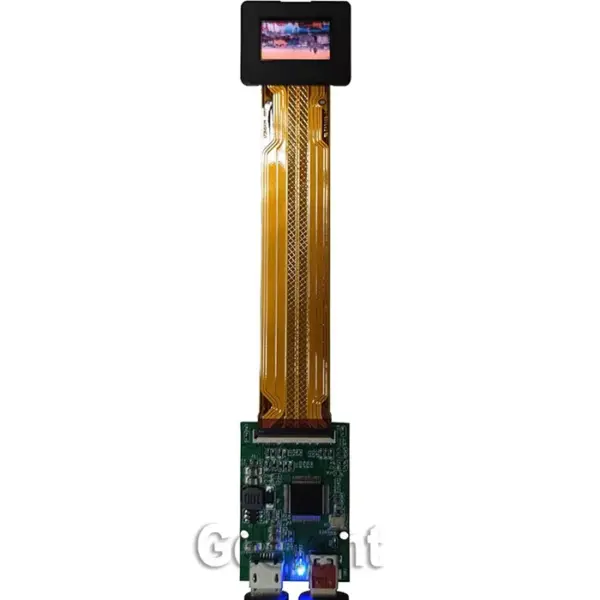
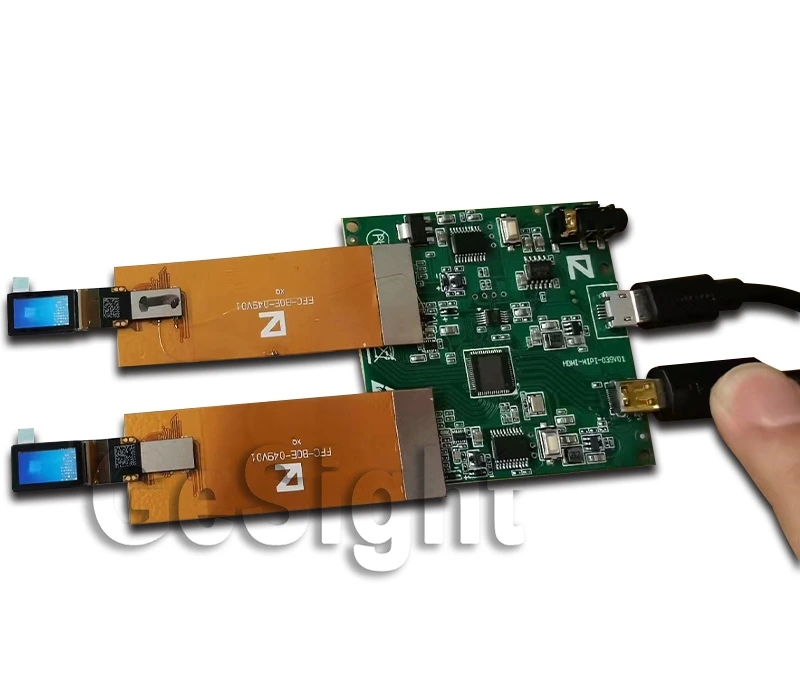
microdisplays connected to an HDMI controller board for testing and demo

HDMI Controller Board for BO049FHPMO Demo & Evaluation

To speed up prototyping and validation, Gesight can provide an HDMI Controller Board that drives the BO049FHPMO 0.49-inch FHD Micro OLED directly from common video sources. As shown, the board supports dual microdisplay connections for binocular or side-by-side testing, making it ideal for early-stage AR/VR optical engine bring-up, image tuning, and signal verification.

The controller board accepts a standard HDMI input for plug-and-play playback from a PC, media box, or test generator, while USB Type-C supplies power for a clean, single-cable setup. It converts HDMI video into the microdisplay’s required interface and provides a stable output path for consistent evaluation—helpful when comparing brightness, sharpness, and uniformity across different optical stacks. For engineers, this reduces development time by avoiding custom bridge design at the demo stage, and enables faster iteration on firmware, optics, and mechanical layout.

Miniature Form Factor for Space-Constrained Optical Engines

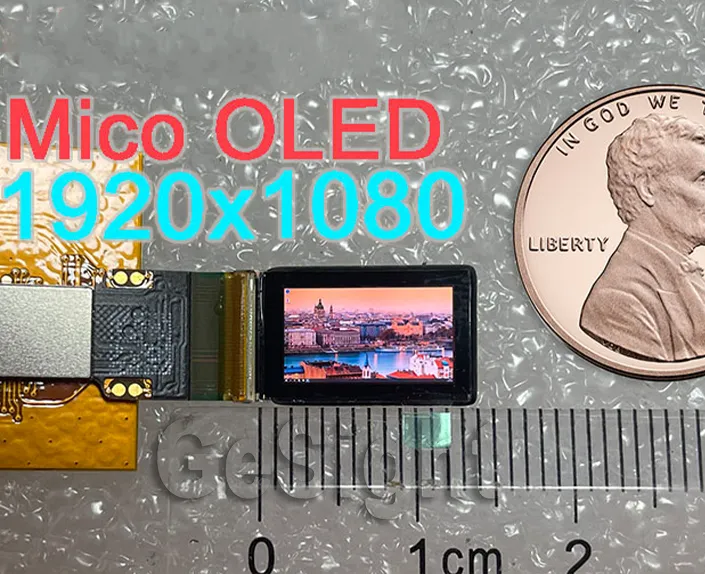
This module is engineered for designs where every millimeter counts. BO049FHPMO’s microdisplay footprint allows it to sit comfortably inside tight housings, and its compact geometry supports easier mechanical planning for binocular layouts or stacked optical structures. For early-stage prototyping, the small size makes it practical to build lighter test rigs, shorten optical distances, and iterate faster on lens selection and enclosure design—without sacrificing resolution density or visual precision.

0.49-inch FHD (1920×1080) AMOLED microdisplay module with ruler and coin for size reference
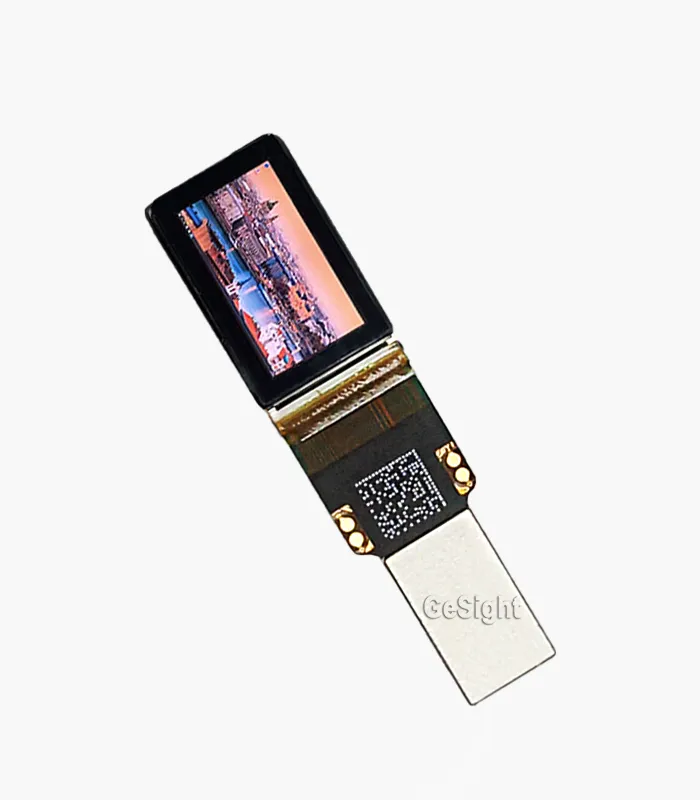
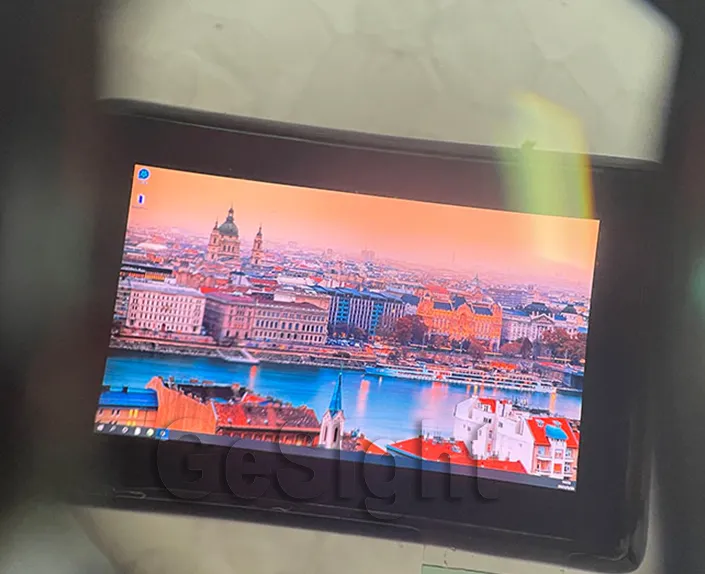
microdisplay showing a colorful cityscape demo on screen

True-to-Life Image Rendering on BO049FHPMO

BO049FHPMO is built to preserve fine detail and natural gradients in near-eye viewing. With FHD 1920×1080 packed into a 0.49-inch microdisplay and an ultra-high 4496 PPI, the panel keeps small UI elements crisp while maintaining smooth color transitions across complex scenes—especially useful for map layers, text overlays, and photoreal content inside compact optical paths. The result is a cleaner, more controlled image presentation for AR/VR evaluation, where sharp edges, stable tones, and consistent contrast matter during focus tuning and optical alignment.

Specifications
Size

0.49 inch

Pixels

1920(H) × 1080(V)

Interface

Brightness

700 cd/m² (White brightness, typ., ±20%)

Manufacturer

Gesight

Display Type

Micro OLED

Display Mode

AMOLED (Active Matrix OLED microdisplay panel module)

Color Depth

Refresh Rate

50–100 Hz

Viewing Angle Range

-20° to +20° (luminance / color shift criteria in optical spec)

Outline L*W*H

15.65 ±0.15 mm × 9.09 ±0.25 mm × 1.50 ±0.04 mm

Active Area L*W

11.053 mm × 6.337 mm

Orientation

Supply Voltage

VCI 2.8 V; VDD1 1.8 V; VDD2 1.2 V

Consumption

180 mW (50 Hz); 360 mW (100 Hz); 450 mW (max in table)

Operating Temperarure

−30 to +70 °C

Storage Temperature

−30 to +80 °C

Bezel Area (mm)

W total 2.753 mm (≈1.3765 mm each side); L total 4.597 mm (≈2.2985 mm each side)

Aspect Ratio

16:9

Connection Type

FPC (flex cable)

IC package

Touch Panel

Pixel Pitch

Sunlight Readable

Model

BO049FHPMO

PPI ( pixels per inch )

4496 PPI

Application

VR/AR near-eye microdisplay

Pins Description
Pin No. Symbol Type Description
1 ELVDD Output Power supply for OLED cell; connect capacitor for stabilization
2 VCOM Output Power supply for OLED cell; connect capacitor for stabilization
3 MVSS Power System GND for MIPI interface
4 MVSS Power System GND for MIPI interface
5 CLKN Input DSI-CLK- (MIPI); differential clock; if not used keep open
6 DATAP1 Input/Output DSI-D1+ (MIPI); differential data; if not used keep open
7 CLKP Input DSI-CLK+ (MIPI); differential clock; if not used keep open
8 DATAN1 Input/Output DSI-D1- (MIPI); differential data; if not used keep open
9 MVSS Power System GND for MIPI interface
10 MVSS Power System GND for MIPI interface
11 DATAN0 Input/Output DSI-D0- (MIPI); differential data; if not used keep open
12 DATAP2 Input/Output DSI-D2+ (MIPI); differential data; if not used keep open
13 DATAP0 Input/Output DSI-D0+ (MIPI); differential data; if not used keep open
14 DATAN2 Input/Output DSI-D2- (MIPI); differential data; if not used keep open
15 MVSS Power System GND for MIPI interface
16 VSS Power System GND for internal digital system
17 DATAN3 Input/Output DSI-D3- (MIPI); differential data; if not used keep open
18 VREF1 Power Regulator output for internal reference voltage; connect capacitor
19 DATAP3 Input/Output DSI-D3+ (MIPI); differential data; if not used keep open
20 VGSP Output Gamma top voltage; connect capacitor
21 VSS Power System GND for internal digital system
22 VGMP Output Gamma top voltage; connect capacitor
23 MVDD Output Regulator output for MIPI analog system power; connect capacitor
24 VREF3 Output Regulator output for internal reference voltage; connect capacitor; connect a Schottky diode to GND
25 EN_AOI Input AOI mode enable (0=disable, 1=enable)
26 VREF2 Output Regulator output for internal reference voltage; connect capacitor
27 IM[0] Input Interface select: IM[0]=0 Command Execute=MIPI, Image Write=MIPI; IM[0]=1 Command Execute=I2C, Image Write=MIPI
28 SDA Input/Output Bi-direction data pin in I2C I/F; if not used connect to VDDI
29 RESX Input Reset signal (active low)
30 SCL_WRX Input Synchronous clock in I2C I/F; if not used connect to VDDI
31 RL_SEL Input Right/Left eye select (recommended connect “0”): 0=Left-Eye, 1=Right-Eye; RL_SEL.0 slave address 0x4C or 0x4E; RL_SEL.1 slave address 0x4D or 0x4E
32 OCP_OUT Output Over current protect output flag
33 V_TEST Power Connect to VCOM
34 GPIO Input/Output Digital global purpose in/out test pin
35 OCP_VDD2 Output Regulator output for MIPI analog system power; connect capacitor
36 EN_EXT_VDD Input External VDD power mode enable: 0=internal VDD, 1=external VDD
37 OTP_PWR Input OTP program power; if not use, connect to GND or OPEN
38 AVSS Power System GND for analog system
39 AVEE Power -4.0V ~ -6.5V power supply for OLED cell; connect capacitor
40 AVDD Power 5V ~ 6.5V power supply for analog system; connect capacitor
Electrical Characteristics

1) Electrical Characteristics Form — BO049FHPMO

1.1 DC Characteristics (Power & Operation Voltage/Current)

Parameter Symbol Condition Min Typ Max Unit
AVDD Voltage 5.4 5.5 5.6 V
AVDD Input Current 100 mA
AVEE Voltage -6.1 -6.0 -5.9 V
AVEE Input Current 100 mA
VDDI Voltage 1.65 1.8 1.95 V
VDDI Input Current 100 mA
MIPI I/O Power Supply MVDD 1.26 V

Note in spec: “Typical voltage is required necessarily for best display performance.”


1.2 AC Characteristics — MIPI High Speed Mode

Parameter Symbol Min Typ Max Unit
UI instantaneous UIINST 1 3 ns
T Data to Clock Skew TSKEW -0.15 0.15 UIHS
RX Data to Clock Setup Time Tolerance TSETUP 0.15 UIHS
RX Data to Clock Hold Time Tolerance THOLD 0.15 UIHS

1.3 AC Characteristics — MIPI Low Power Mode

Parameter Description Min Typ Max Unit
TLPX(M) LP state period length (MCU → display) 50 ns
TLPX(D) LP state period length (display → MCU) 50 ns
TTA-SURE Wait after LP-10 before LP-00 (Turnaround) TLPX 2*TLPX
TTA-GET Drive LP-00 after accepting control (Turnaround) 5*TLPX
TTA-GO Drive LP-00 before releasing control (Turnaround) 4*TLPX

1.4 AC Characteristics — I2C Interface Timing

Parameter Symbol Min Typ Max Unit
I2C Clock Frequency Fclk 400 kHz
I2C Clock Low Tclkl 1300 ns
I2C Clock High Tclkh 600 ns
I2C Data Rising Time Tdr 300 ns
I2C Data Falling Time Tdf 300 ns
I2C Data Setup Time Tdsu 100 ns
I2C Data Hold Time Tdhd TBD ns
I2C Setup Time (Start) Tsu_sta 600 ns
I2C Hold Time (Start) Thd_sta 600 ns
I2C Setup Time (Stop) Tsu_stp 600 ns
I2C Bus Free Time (Stop) Tbuf_stp 1300 ns

I2C Notes (from spec):

  • Slave address: 0x4C
  • Pull-up resistor: 4.7 kΩ @ 100 kbps

2) Back-light Specification Form — BO049FHPMO

Item Spec
Backlight Type None
LED Color N/A
Backlight Driver N/A
Forward Voltage N/A
Current N/A
Lifetime N/A
Backlight Connector N/A

FAQ

Where can I buy this display?

If you just need a few samples, it`s better to directly on our Aliexpress store, we are 5 stars feedback supplier with 100% Honesty. (The buy link is on the right of the product image)
For bulk orders, it`s better to contact us and get a better price. 

Different displays have different characteristics, just tell Gesight Display your application, and operating environment, Gesight Display will suggest a suitable display for you.

Gesight Display provide HDMI/Type-C controller board or individual demo kit to test.
The pictures of demo kit can be changed by yourself. 

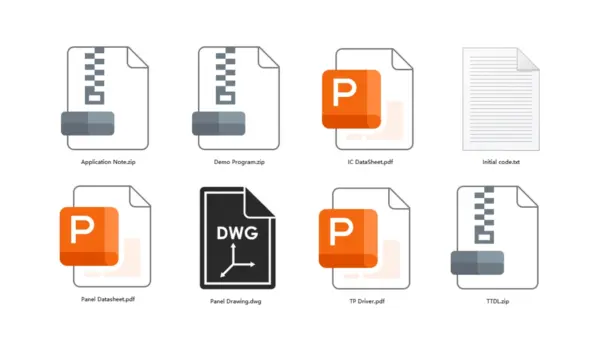
Gesight Display will provide necessary specifications for most LCD/OLED on sale, including,
Display Datasheet
Display Drawing
IC Datasheet
Circuit schematic
For most electronics engineers, our specifications are enough to run the display, and we will provide some assistance.
But Gesight Display is not a school, if customers don`t know the basic knowledge to design circuit boards, we suggest using our controller board to drive the display.

First, you need to check whether this display has On-cell or In-cell touch panel, if has, it only needs to add a cover glass on it. If not, it needs an external touch panel.
(On-cell and In-cell are integrated PCAP touch panels on the display screen)
Because the shape of the cover glass depends on the design of the clients, to avoid infringement of appearance,  most of the developers need different customized touch panels.
Gesight Display can provide a customized touch screen with a low cost of tooling charge.

1. UPS/Fedex/DHL/TNT, the best choice for most clients, 3~7 days to arrive.
2. Aliexpress standard ship, this way is cheap and slow, usually take more than 10 days. Only for samples.
3. For Russian clients, EMS or Aliexpress shipment is better.
4. Any designated logistics are acceptable
 

Most display panels are from giant manufacturers such as BOE, Sharp, LG, EDO, AUO, etc. They have already tested with strict standards.
For OEM products from Panox Display factory, please check the quality test standards.   
The lifetime is different on different images, check the lifetime on datasheet to study it. 

If your Raspberry Pi can support the interface of the display panel, and you know how to program on Raspberry Pi, you can connect to our display.
If you don`t know or don`t want to write a display program on Raspberry Pi, it`s better to get an HDMI controller board from us, and Panox Display will send a config.txt file for reference.
 

lcd_connectors

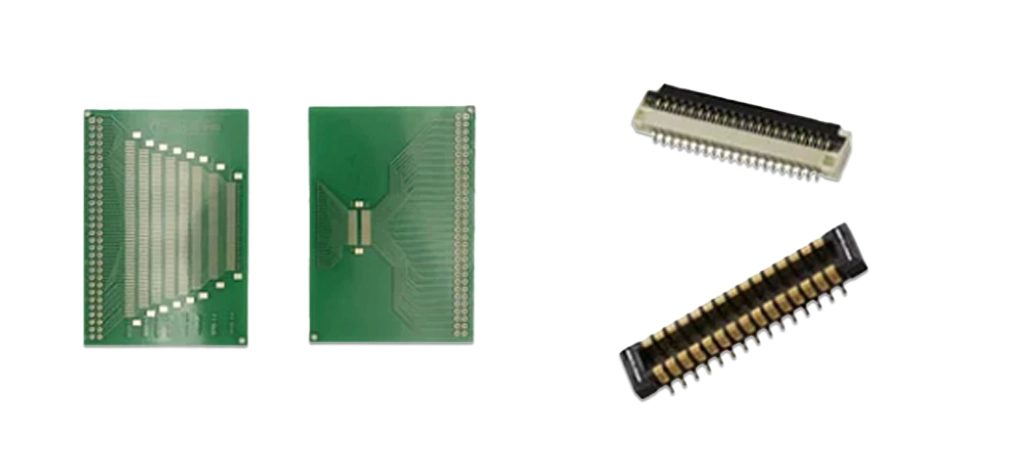
Free convertor board and Connectors

Fast Shipping

Most of our clients are manufacturers purchasing our displays for their applications, who are willing to get samples as soon as possible.

Different products collocations have different package, please confirm the shipping cost with us when place an order.
(4~6 days for most countries and area)

ship_express
specification_lcd

Specification

Panox Display offers the following specifications for most LCD/OLED products:

  • Display datasheet

  • Mechanical drawing

  • IC datasheet

  • Circuit schematic

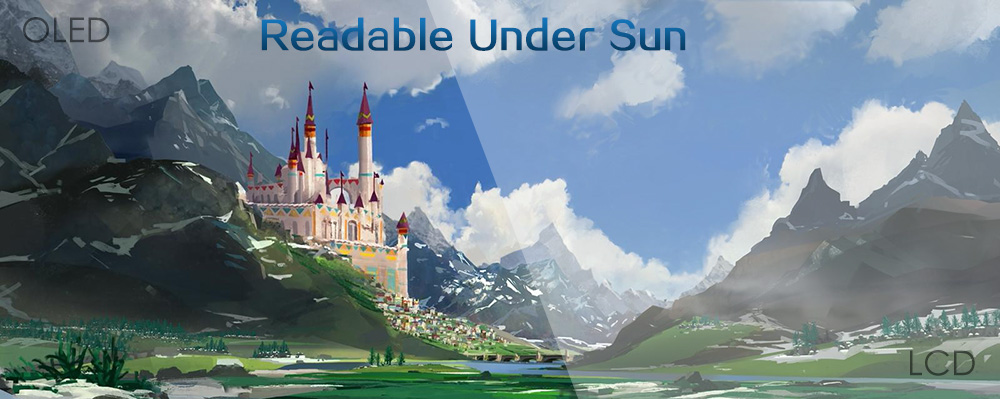
Readable Under Sun

Compare to LCD, OLED has many advantages as follows:

Thin Like Paper:More than 50% thinner and lighter than LCD, creating an edgy form factor in style.

Green Power:Clock-mode standby can be up to 60 hours, much lower consumption compare to LCD displays.

"Wow" Effect:High contrast ratio and wide color gamut offer sharp and vivid image, and consistent display from any angle.

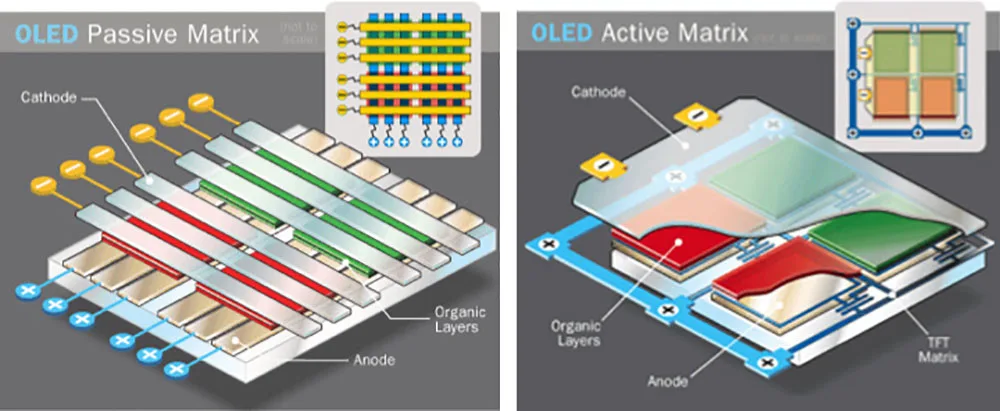
OLED Type Structures

        OLED driver as well as two divided into passive (PMOLED) active (AMOLED), which PMOLED simple structure, each pixel is represented by a separate cathode and anode control, no additional driver circuit, but too much control lines restrict its application of high-resolution large screen; AMOLED entire cathode surface electrode via a drive circuit driving the light emitting anode, significantly reducing the number of control lines, it has a low-power, high-resolution, fast response and other characteristics, AMOLED therefore gradually become the mainstream OLED display.

About Us

Gesight is a high-tech company specializing in OLED, LCD displays. Integrated with display marketing and sales, customized LCD OEM manufacturing, driver board development, customized TP, etc.

After six years of effort and development, we have grown up to a certain size, now we have a service team with excellent service quality, professional technical service.

After several years of steady development, Gesight has served hundreds of customers from different places all over the world. Including big companies such as Bosch, Nokia, Garmin, Circuits, and countless small and medium-size companies or electronics DIYers.

gesight_lcd_company
strict_quality_gesight

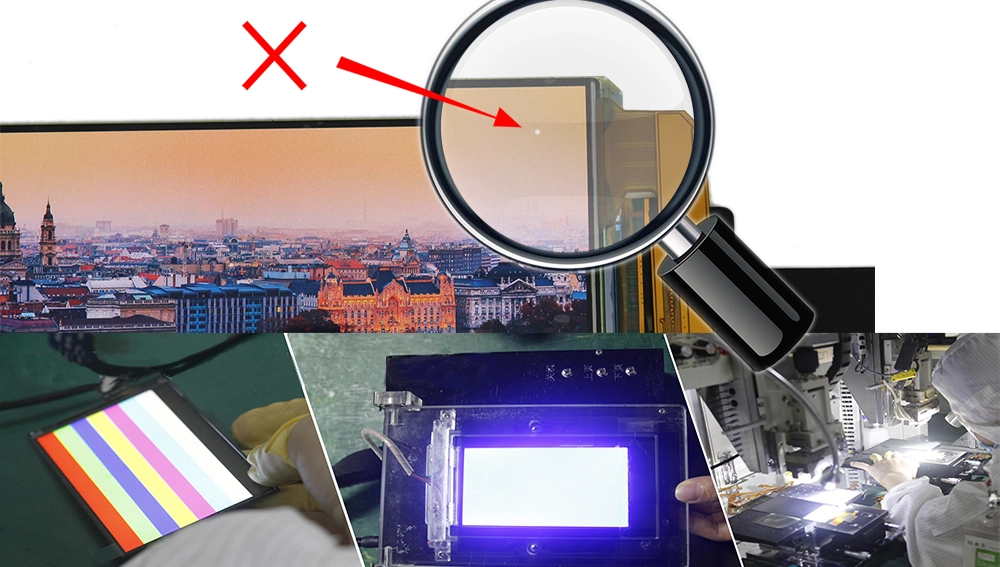
Say No to any bright/dart dots on screen !!
Strict Quality Control


We implement strict quality control through every stage of production and inspection. Each display undergoes rigorous testing to eliminate any pixel defects, including bright, dark, or stuck dots. Our professional QC team uses advanced optical equipment to ensure flawless screen performance, delivering only high-reliability LCD and OLED panels to our customers.

strict quality control

rigorous testing

flawless screen performance

high-reliability

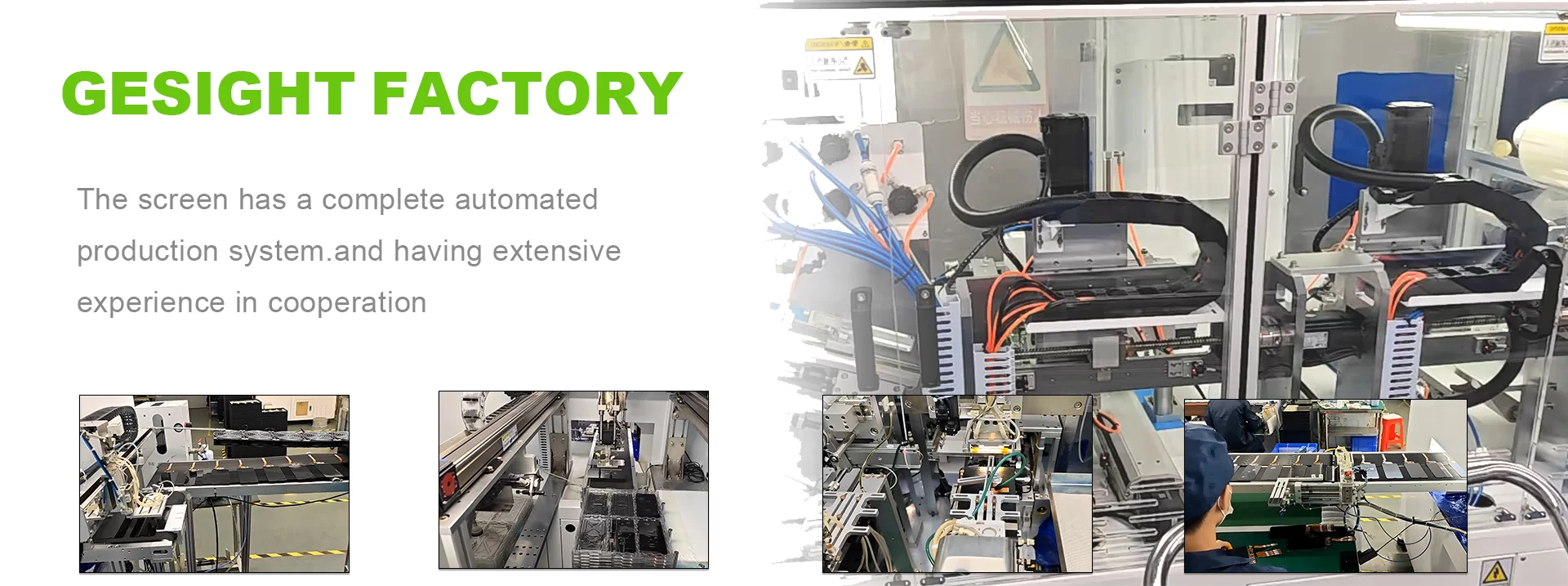
gesight_factory