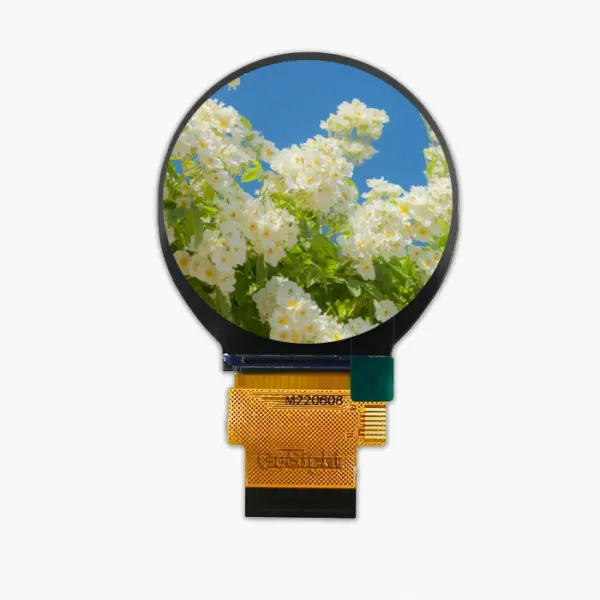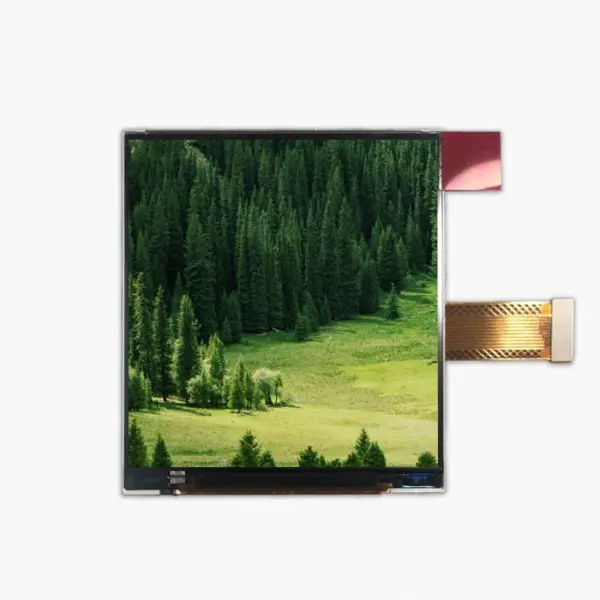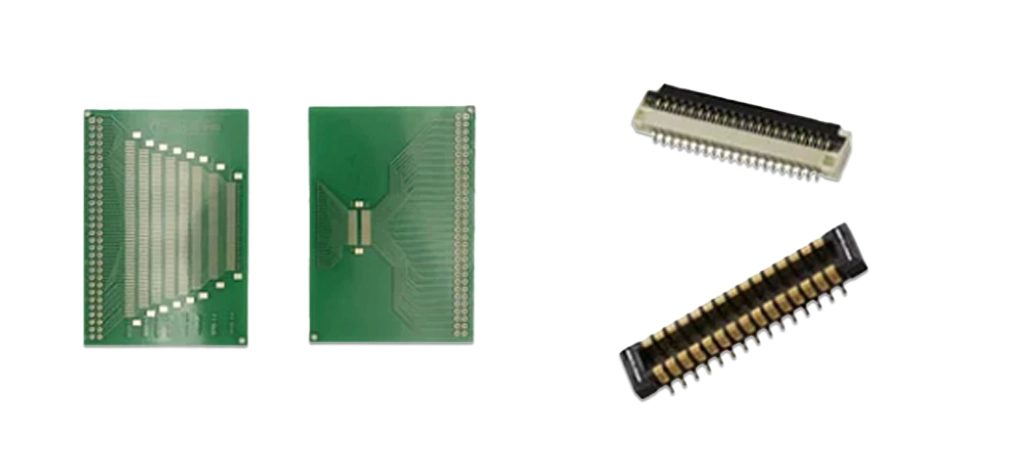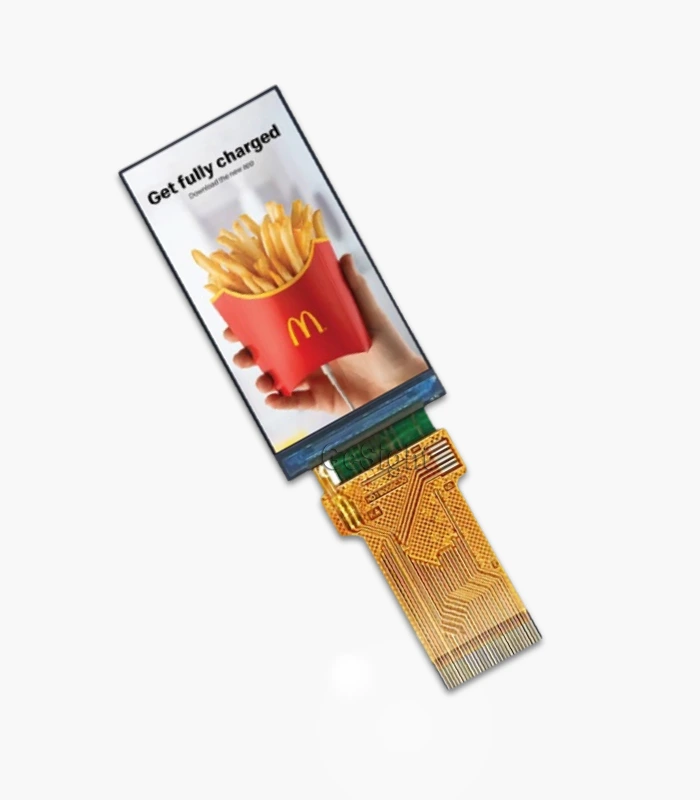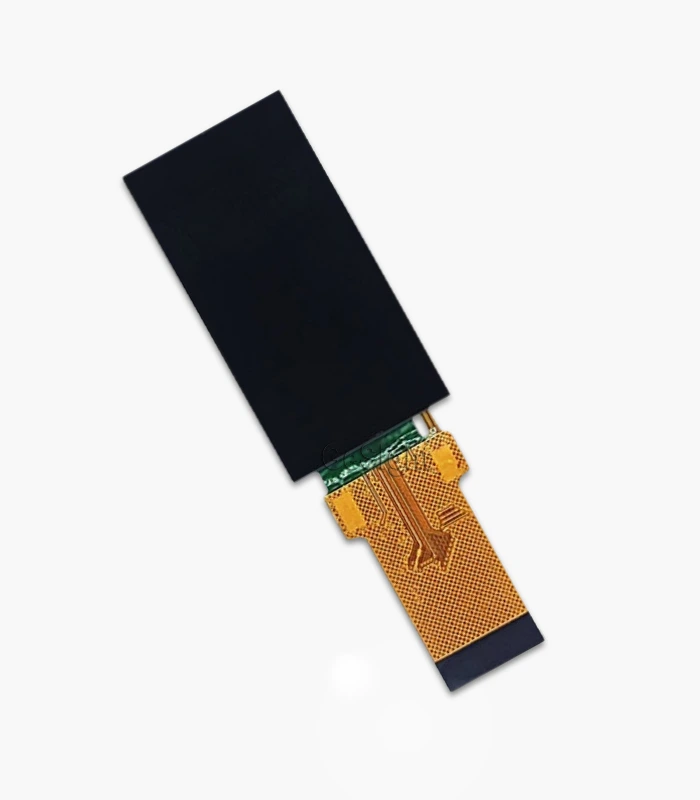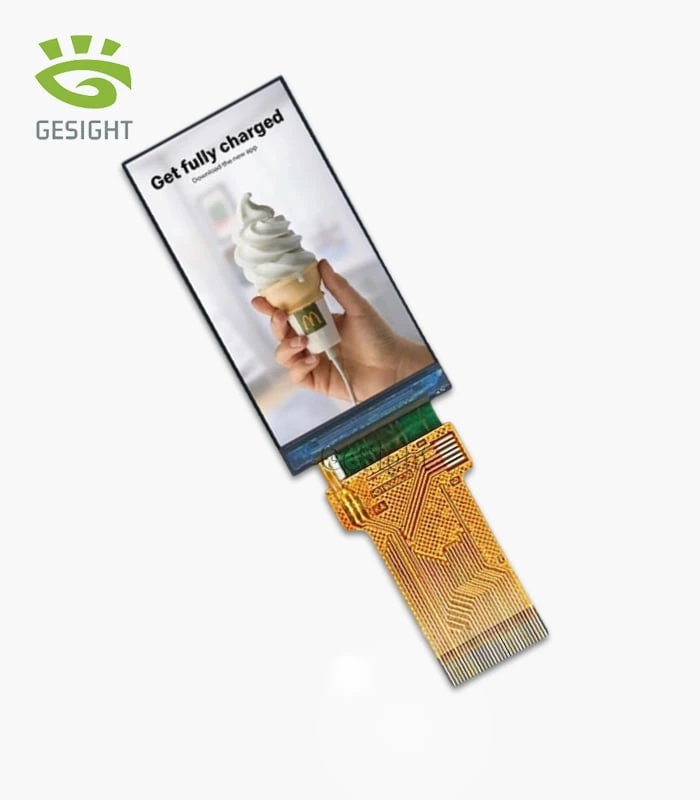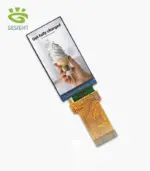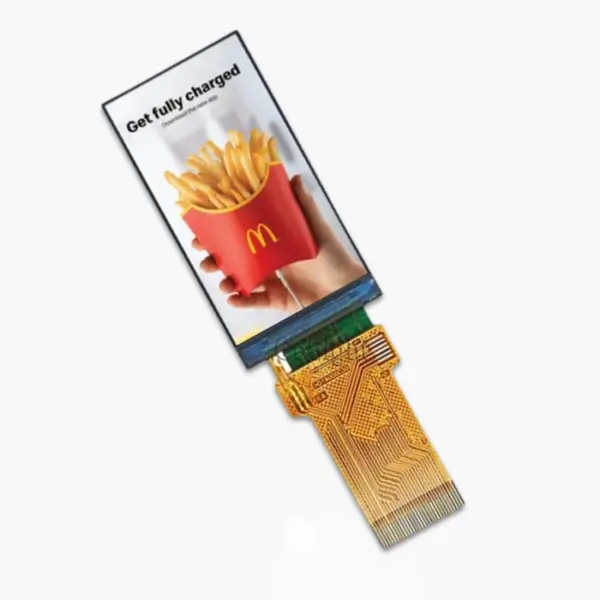
1.9-inch TFT-LCD Display Module 170×320 4-SPI
$15.10piece
Quick Shipping
1-2 days after payment
Sturdy packaging
Never Damage in Ship
24/7 Support
Unlimited help desk
5-7 days Delivery
DHL/Fedex/UPS
Get Your Exclusive Quotation
Website prices are retail (incl. shipping & PayPal fees). Company clients enjoy up to 70% off on bulk orders — submit your requirements now.
Model: PL19006C30
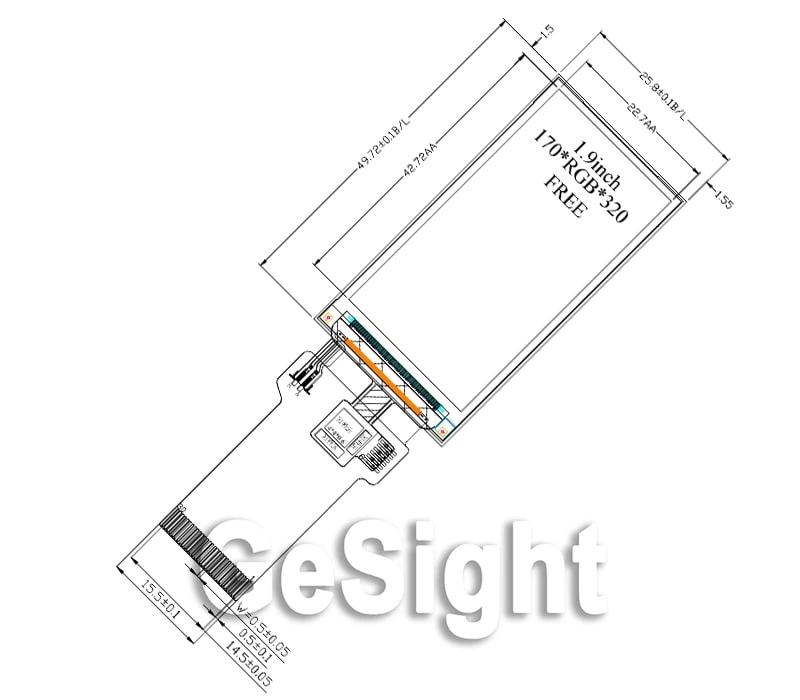
The 1.9-inch TFT-LCD Display delivers clear, practical visuals with a 170×320 (RGB) resolution and 262K colors, making it a solid fit for compact embedded interfaces. With 4-SPI / 8-bit 8080 interface options and an ultra-slim 25.8 × 49.72 × 1.43 mm outline, this module supports efficient integration in space-sensitive designs. It features an IPS, transmissive, normally black panel with a 60 Hz frame rate, wide 80°/80°/80°/80° viewing angles (CR ≥ 10), and typical 330 cd/m²
luminance (If=20mA). The module integrates the ST7789V2 driver IC and supports a 4-white-LED backlight driven by constant current (15 mA per LED, reference 3.2 V / 60 mA). A wide operating temperature range (-20 to +70°C) helps ensure stable performance in demanding environments.
Application
Embedded HMI | Portable Instruments | Handheld Devices | Smart Home Panels
Customized Options
FPC | Touch Panel | Cover Glass | Controller Board | Brightness
| Size |
1.9 inch |
|---|---|
| Pixels |
170(RGB) × 320 |
| Interface | |
| Brightness |
Typ. 330 cd/m²(If=20mA) |
| Manufacturer |
Gesight |
| Display Type |
TFT-LCD |
| Display Mode |
IPS / Transmissive / Normally Black |
| Color Depth | |
| Refresh Rate |
60Hz |
| Viewing Angle Range |
H: 80°/80°,V: 80°/80°(CR≥10) |
| Outline L*W*H |
25.8(H) × 49.72(V) × 1.43(T) mm |
| Active Area L*W |
22.7(H) × 42.72(V) mm |
| Supply Voltage |
VDD: 2.4–3.3V(Typ 2.8V); VCI: 2.4–3.3V(Typ 2.8V); IOVDD: 1.65–3.3V(Typ 1.8/2.8V) |
| Consumption |
Normal display Ivdd: Typ 50 mA;Standby Ivdd: Typ 20 µA |
| Operating Temperarure |
-20 ~ 70 ℃ |
| Storage Temperature |
-30 ~ 80 ℃ |
| Bezel Area (mm) |
– |
| Aspect Ratio |
17:32 |
| Connection Type |
– |
| IC package |
– |
| Touch Panel | |
| Orientation | |
| Pixel Pitch |
≈ 0.1335 mm |
| Sunlight Readable |
– |
| Model |
PL19006C30 |
| PPI ( pixels per inch ) |
≈ 191 PPI |
| Application |
– |
| Pin No. | Pin Name (Symbol) | Function / Notes |
|---|---|---|
| 1 | GND | Power Ground |
| 2 | VCI (Pin Define) / VDD (Interface table) | Power supply for analog (table notes VDD = 2.4–3.3V) |
| 3 | IM2 | Interface mode select (with IM1) |
| 4 | IM1 | IM1=0, IM2=0 → 8080-8bit; IM1=1, IM2=1 → 4-line SPI |
| 5 | RESET | Reset signal, active low |
| 6 | CS | Chip select (Low enable / High disable) |
| 7 | D/C (SPI-SCL) | 8080: data/command select; SPI: serial clock |
| 8 | WR (SPI-RS) | 8080: write strobe; SPI: data/command select (RS) |
| 9 | RD | 8080: read strobe; SPI mode: must connect to GND |
| 10 | SDA | SPI data I/O (latched on rising edge of SCL) |
| 11 | DB0 (D0) | MCU parallel data bus |
| 12 | DB1 (D1) | MCU parallel data bus |
| 13 | DB2 (D2) | MCU parallel data bus |
| 14 | DB3 (D3) | MCU parallel data bus |
| 15 | DB4 (D4) | MCU parallel data bus |
| 16 | DB5 (D5) | MCU parallel data bus |
| 17 | DB6 (D6) | MCU parallel data bus |
| 18 | DB7 (D7) | MCU parallel data bus |
| 19 | SDO (Pin Define) / NC (Interface table) | PDF conflict (see note below) |
| 20 | LEDA | LED Anode |
| 21 | LEDK1 | LED Cathode |
| 22 | LEDK2 | LED Cathode |
| 23 | LEDK3 | LED Cathode |
| 24 | LEDK4 | LED Cathode |

| 25 | GND | Power Ground |
| 26 | TP_RST | Touch panel reset; if unused, leave open |
| 27 | TP_SCL | Touch panel I²C clock; if unused, leave open |
| 28 | TP_SDA | Touch panel I²C data; if unused, leave open |
| 29 | TP_INT | Touch panel interrupt to host; if unused, leave open |
| 30 | GND | Power Ground |
1)Electrical Characteristics
1.1 Absolute Maximum Ratings (VSS = 0V, Ta = 25°C)
| Item | Symbol | Min | Max | Unit | Note |
|---|---|---|---|---|---|
| Supply Voltage (Power supply) | VDD | -0.3 | +4.6 | V | |
| Supply Voltage (IO) | IOVDD | -0.3 | +4.6 | V | |
| Input Voltage | Vi | -0.3 | IOVDD + 0.3 | V | |
| Storage Temperature | Tstg | -30 | +80 | °C | |
| Operating Temperature | Top | -20 | +70 | °C | |
| Storage Humidity | Hstg | 10 | Note 1 | %RH | |
| Operating Humidity | Hop | 10 | Note 1 | %RH |
1.2 DC Characteristics
| Item | Symbol | Min | Typ | Max | Unit |
|---|---|---|---|---|---|
| Supply Voltage (Power supply) | VDD | 2.4 | 2.8 | 3.3 | V |
| Supply Voltage (Analog) | VCI | 2.4 | 2.8 | 3.3 | V |
| Supply Voltage (IO) | IOVDD | 1.65 | 1.8 / 2.8 | 3.3 | V |
| Logic Low input voltage | VIL | -0.3IOVDD | – | 0.3IOVDD | V |
| Logic High input voltage | VIH | 0.7IOVDD | – | IOVDD | V |
| Logic Low output voltage | VOL | – | – | 0.2IOVDD | V |
| Logic High output voltage | VOH | 0.8IOVDD | – | – | V |
| Current consumption (Normal display) | Ivdd | – | 50 | – | mA |
| Current consumption (Standby mode) | Ivdd | – | 20 | – | uA |
| Frame Frequency | fFR | – | 60 | – | Hz |
2)Backlight Specification
2.1 Backlight Basic Spec (from Mechanical Drawing Notes)
| Parameter | Spec |
|---|---|
| Backlight Type | 4 White LEDs |
| LED Current (per LED) | If = 15.0 mA / LED (constant current) |
| Backlight Circuit Reference | VF = 3.2 V, IF = 60 mA |
2.2 Backlight Driving Recommendation (from Backlight circuit page)
| Item | Recommendation |
|---|---|
| Driving method | Constant current recommended |
| Current guidance | LED lamp current < 20 mA; recommend 15–20 mA for every LED |
| Suggested driver IC (example) | AW9364 (recommended in reference circuit) |
2.3 Backlight Pins (for wiring)
| Pin | Name | Description |
|---|---|---|
| 20 | LEDA | LED Anode |
| 21 | LEDK1 | LED Cathode |
| 22 | LEDK2 | LED Cathode |
| 23 | LEDK3 | LED Cathode |
| 24 | LEDK4 | LED Cathode |
FAQ
Where can I buy this display?
If you just need a few samples, it`s better to directly on our Aliexpress store, we are 5 stars feedback supplier with 100% Honesty. (The buy link is on the right of the product image)
For bulk orders, it`s better to contact us and get a better price.
I don`t know which display is suitable for my project
Different displays have different characteristics, just tell Gesight Display your application, and operating environment, Gesight Display will suggest a suitable display for you.
How can I test the display screen?
Gesight Display provide HDMI/Type-C controller board or individual demo kit to test.
The pictures of demo kit can be changed by yourself.
How can I drive the display panel?
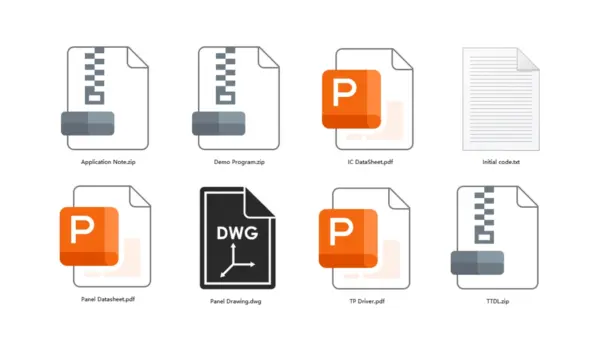
Gesight Display will provide necessary specifications for most LCD/OLED on sale, including,
Display Datasheet
Display Drawing
IC Datasheet
Circuit schematic
For most electronics engineers, our specifications are enough to run the display, and we will provide some assistance.
But Gesight Display is not a school, if customers don`t know the basic knowledge to design circuit boards, we suggest using our controller board to drive the display.
Where can I get the cover glass or touch screen for this display panel?
First, you need to check whether this display has On-cell or In-cell touch panel, if has, it only needs to add a cover glass on it. If not, it needs an external touch panel.
(On-cell and In-cell are integrated PCAP touch panels on the display screen)
Because the shape of the cover glass depends on the design of the clients, to avoid infringement of appearance, most of the developers need different customized touch panels.
Gesight Display can provide a customized touch screen with a low cost of tooling charge.
How do Gesight Display ship display panels?
1. UPS/Fedex/DHL/TNT, the best choice for most clients, 3~7 days to arrive.
2. Aliexpress standard ship, this way is cheap and slow, usually take more than 10 days. Only for samples.
3. For Russian clients, EMS or Aliexpress shipment is better.
4. Any designated logistics are acceptable
What`s the quality standard of Gesight Display`s display panels?
Most display panels are from giant manufacturers such as BOE, Sharp, LG, EDO, AUO, etc. They have already tested with strict standards.
For OEM products from Panox Display factory, please check the quality test standards.
What`s the lifetime of these display panels?
The lifetime is different on different images, check the lifetime on datasheet to study it.
Can I connect this display to Raspberry Pi?
If your Raspberry Pi can support the interface of the display panel, and you know how to program on Raspberry Pi, you can connect to our display.
If you don`t know or don`t want to write a display program on Raspberry Pi, it`s better to get an HDMI controller board from us, and Panox Display will send a config.txt file for reference.
How many days does it take to develop a project?
What is the budget for the project?
Can design edits be made during design time?
Fast Shipping
Most of our clients are manufacturers purchasing our displays for their applications, who are willing to get samples as soon as possible.
Different products collocations have different package, please confirm the shipping cost with us when place an order.
(4~6 days for most countries and area)
Specification
Panox Display offers the following specifications for most LCD/OLED products:
Display datasheet
Mechanical drawing
IC datasheet
Circuit schematic
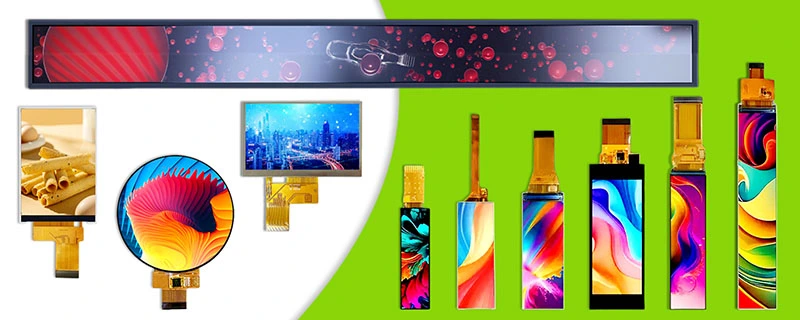
TFT-LCD: More Choices for Every Need
Unlike OLED displays, which often have only a few models for each size, the TFT LCD screen market offers a wide variety. After many years of continuous production by Chinese OEM manufacturers, there are countless TFT LCD display options for almost every size, with different resolutions, brightness levels, and specifications. Whether you need high brightness for outdoor use, fine resolution for industrial applications, or cost-effective solutions for consumer products, a TFT LCD module is available to meet your requirements. and vivid image, and consistent display from any angle.
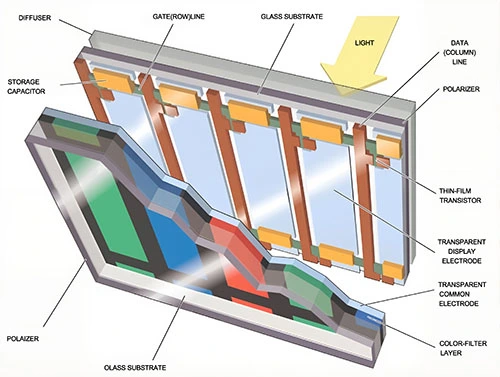
Structure of a TFT-LCD
A TFT-LCD display is made of multiple precise layers, each serving a unique function. Starting from the viewing side, the polarizer controls light polarization, while the first glass substrate supports the color filter layer that creates red, green, and blue subpixels. Beneath this is the transparent common electrode and the transparent display electrode, which work together to control light transmission.
The active layer contains the thin-film transistor (TFT) and storage capacitor, connected through the gate (row) line and source (column) line to drive each pixel. A second glass substrate supports this circuit. Behind the panel, a diffuser spreads light evenly, while the backlight provides the illumination necessary for the display to be visible. Finally, another polarizer fine-tunes light before it exits the screen, ensuring clear, bright images.
By combining these layers into a single TFT-LCD module, manufacturers achieve sharp resolution, accurate colors, and consistent brightness for a wide range of applications.
About Us
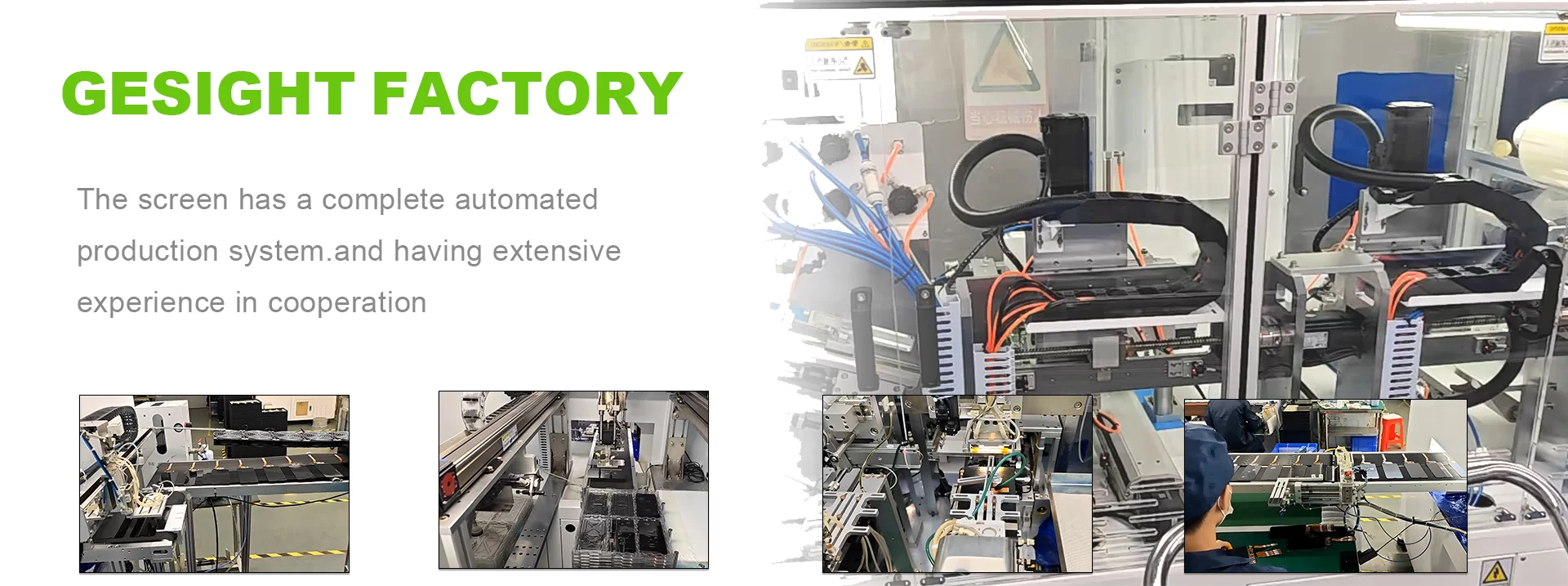
Gesight is a high-tech company specializing in OLED, LCD displays. Integrated with display marketing and sales, customized LCD OEM manufacturing, driver board development, customized TP, etc.
After six years of effort and development, we have grown up to a certain size, now we have a service team with excellent service quality, professional technical service.
After several years of steady development, Gesight has served hundreds of customers from different places all over the world. Including big companies such as Bosch, Nokia, Garmin, Circuits, and countless small and medium-size companies or electronics DIYers.
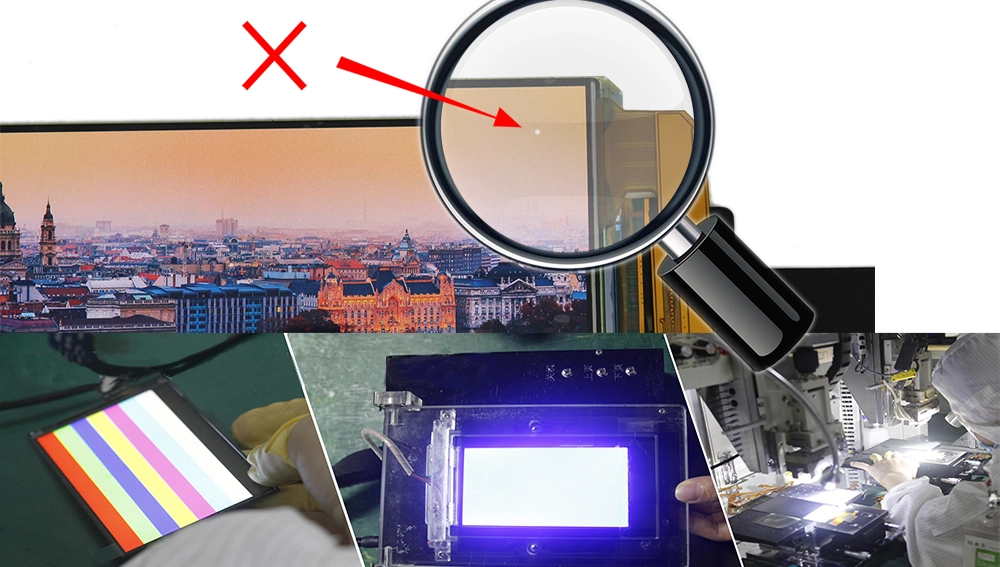
Say No to any bright/dart dots on screen !!
Strict Quality Control
We implement strict quality control through every stage of production and inspection. Each display undergoes rigorous testing to eliminate any pixel defects, including bright, dark, or stuck dots. Our professional QC team uses advanced optical equipment to ensure flawless screen performance, delivering only high-reliability LCD and OLED panels to our customers.
Strict quality control
Rigorous testing
Flawless screen performance
High-reliability