

 All products
TFT LCD Across Industries: Applications & Trends

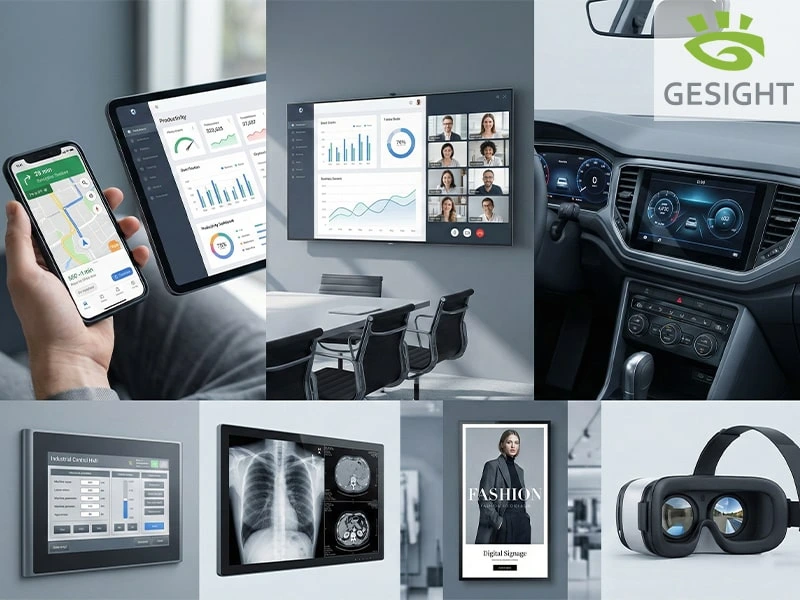
Your day begins with a smartphone alarm. On the commute, an in-car navigation screen guides every turn. In the meeting room, a smart display presents carefully prepared slides. At night, a home theater turns the living room into an immersive entertainment space. We already live in a world surrounded by screens—and behind many of them stands a quiet workhorse: the TFT LCD.
Today, a TFT LCD is no longer just “a display.” It has become a foundational interface for interaction and information delivery, spreading across industries and reshaping how people connect with devices, environments, and data.
Consumer Electronics: The Visual Hub of Personal Digital Life
This is the most familiar—and most competitive—arena for TFT LCD technology. Here, display performance directly defines the user experience.
1.1 Smartphones and Tablets: The Front Line of Display Innovation
Mobile devices place the toughest demands on TFT LCD screens: thinner structures, lighter designs, lower power consumption, and better image quality. This segment has driven backplane evolution from a-Si to LTPS and further toward LTPO, enabling higher PPI, higher screen-to-body ratios, and high refresh rates (144Hz and beyond).
In-Cell and On-Cell touch integration also helps reduce thickness while improving responsiveness by embedding touch functions closer to the panel itself. While OLED continues to grow in the premium tier, TFT LCD remains dominant in mid-range and entry-level products due to its mature supply chain, cost efficiency, and natural resistance to burn-in—making it the practical visual foundation for billions of users worldwide.
1.2 Laptops and Monitors: A Specialized Partner for Work and Play
In laptops and desktop monitors, TFT LCD solutions have become increasingly segmented and purpose-built:
Gaming displays prioritize ultra-high refresh rates (360Hz+) and fast response times (1ms GTG), often using fast LCD technologies such as Fast IPS to reduce motion blur and deliver smoother gameplay.
Professional creation focuses on accurate color reproduction (Adobe RGB, DCI-P3 wide gamut), higher color depth (10-bit), and stable brightness uniformity to support “what you see is what you get” workflows.
Office and business use emphasizes eye comfort (low blue light, flicker-free), ergonomics (tilt, swivel, height adjustment), and long-session usability.
This targeted optimization demonstrates how flexible TFT LCD platforms can be when tuned for specific user needs.
1.3 TVs and Home Theater: The Centerpiece of Living-Room Viewing
Large-format TFT LCD TVs have achieved major leaps in picture quality by adopting two key upgrades: quantum dot (QLED) enhancement and Mini-LED backlighting. Quantum dots expand color purity and gamut, while thousands of Mini-LED dimming zones significantly improve contrast—pushing LCD performance closer to OLED in many viewing scenarios.
In the ultra-large segment (75 inches and above), TFT LCD continues to lead thanks to its strong balance between performance and cost, remaining the mainstream choice for immersive home entertainment.
Commercial and Industrial: The Quiet Backbone of Efficient Operations
If consumer electronics is the spotlight, commercial and industrial use is the structural support behind the stage. In these environments, reliability, durability, and value matter most.
2.1 Digital Signage and Retail Display
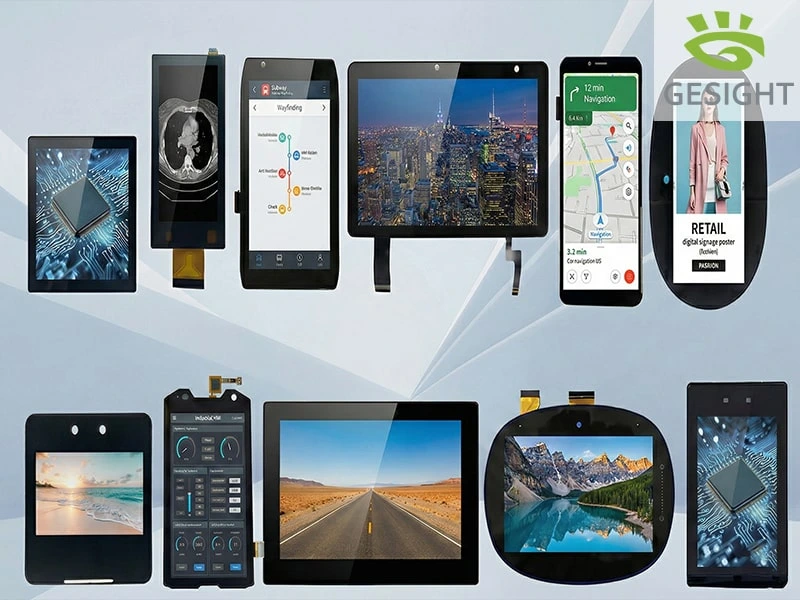
In malls, airports, and subway stations, digital advertising screens and information displays form the city’s visual network. TFT LCD is widely preferred here for stable 24/7 operation and minimal burn-in risk. From traditional advertising players to modern digital shop windows and even transparent display concepts, TFT LCD is transforming how retail communicates—making messaging more dynamic, timely, and targeted.
2.2 Industrial Control and HMI (Human–Machine Interface)
On factory floors and automated production lines, industrial-grade TFT LCD screens serve as the key window between people and machines. These panels are often engineered for harsh conditions, with features such as dust and water resistance, wide operating temperatures (-30°C to 80°C), vibration tolerance, and electromagnetic interference resistance. Their robust performance directly supports continuity, safety, and efficiency in modern manufacturing.
2.3 Medical Imaging and Diagnostic Systems
In medical environments, display requirements become exceptionally strict. Medical-grade TFT LCD monitors must deliver very high resolution (such as 5MP and 8MP) to reveal fine details in X-ray, CT, and MRI imaging. They also require strong grayscale performance and consistent color behavior to support accurate diagnosis. In addition, they must meet demanding regulatory standards and remain stable in sterile or corrosion-resistant settings.
Transportation and Emerging Fields: The Interaction Gateway for Future Tech
The application boundaries of TFT LCD technology continue to expand rapidly into mobility and frontier devices.
3.1 Smart Automotive Cockpits
Cars are evolving from transportation tools into “mobile intelligent spaces.” TFT LCD is central to this transition—powering digital instrument clusters, central infotainment touchscreens, passenger displays, electronic mirrors, and even extra-wide integrated curved panels spanning the dashboard.
Automotive displays must meet high thresholds for brightness (sunlight readability), wide viewing angles, strong contrast, fast low-temperature response, and long lifetime, making this a demanding and high-value segment.
3.2 Aerospace and Marine Systems
In avionics cockpits and marine navigation consoles, TFT LCD displays must provide dependable visibility under extreme conditions—high altitude, high humidity, strong vibration, and other stress factors. Reliability here is tied directly to operational safety, representing one of the most advanced and stringent use cases for TFT LCD technology.
3.3 AR and VR Devices
Although Micro-OLED is often favored for high-end VR headsets, TFT LCD solutions based on fast LCD approaches remain important in many consumer VR products. With high refresh rates, low persistence potential, and highly competitive cost, TFT LCD helps lower the entry barrier for VR experiences and supports broader market adoption.
Conclusion
From pocket-sized personal devices to city-scale public displays, from precise industrial automation to high-demand automotive cockpits, TFT LCD has completed a wide and deep cross-industry expansion. Its long-term strength is not only the display technology itself, but the way it adapts to different scenarios—delivering cost efficiency where scale matters, stability where reliability is critical, and innovation where new interaction models are emerging.
In today’s screen-connected era, the TFT LCD has become something like “visual air”—often unnoticed, yet everywhere—quietly embedded in the infrastructure of modern life and continuously strengthening the way we see, operate, and interact with the world.